

Uneven Skin Texture? Here’s Why Exfoliation Might Be Making It Worse
Does your skin feel rough, bumpy, or uneven no matter what you try? If you’ve been exfoliating in hopes of getting smoother skin—but not seeing results—it might be time to rethink your routine. While exfoliation can help some people, it can actually make things worse for certain skin types.
It’s logical to believe that uneven skin texture is caused by dead skin that needs to be either scrubbed away with an exfoliant or gradually peeled away with peeling agents, like Alpha hydroxy acids and Beta Hydroxy acids. You might have even tried Vitamin C serums or creams that promise improved skin texture, increased collagen production, and an even skin tone.
If you’ve tried exfoliating but your skin still feels rough or bumpy, sensitive skin might be the real issue. Exfoliation can be too harsh, leaving your skin irritated instead of smooth.
What’s Causing Your Uneven Skin Texture?
If you’ve been exfoliating regularly but your skin still feels rough or bumpy, the issue might not be dead skin buildup. Uneven skin texture can be caused by several factors, and for those with sensitive skin, exfoliation could be making things worse.
1. A Compromised Skin Barrier
Your skin barrier is your first line of defense against moisture loss and irritation. When it's weakened, your skin can become rough, dehydrated, and prone to redness. Over-exfoliating strips away essential lipids, making your skin feel even more textured.
2. Dehydration
Sometimes, what feels like uneven texture is actually dehydration. Without enough moisture, your skin can become flaky and develop a rough surface. Instead of scrubbing, your skin might need deep hydration to restore smoothness.
3. Skin Sensitivity and Inflammation
If you have sensitive skin, irritation can lead to persistent roughness. Harsh exfoliants or frequent scrubbing can trigger micro-inflammation, leaving your skin feeling irritated instead of soft.
4. Lack of Nourishing Ingredients
When your skin lacks essential nutrients like omega fatty acids, it struggles to maintain smoothness. Oils rich in barrier-supporting ingredients help replenish your skin, keeping it balanced and healthy.
So, if exfoliation hasn’t been helping, your skin may need hydration, gentle care, and barrier support, not more scrubbing.
Hydrate & Smooth Your Skin With Gentle Care

Exfoliation isn't always the answer to smoother skin. Sometimes, your skin needs more hydration and nourishment instead.
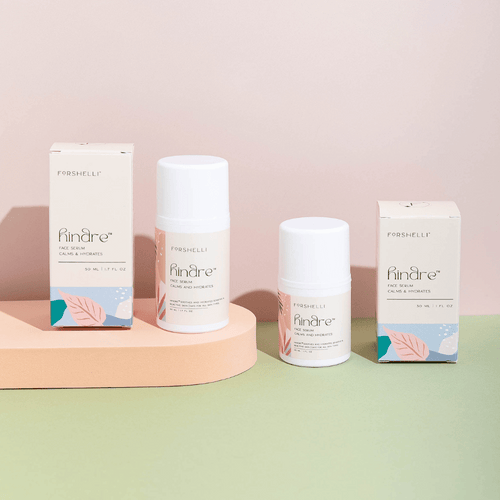
Hindre® Face Serum provides lightweight, lasting hydration to help skin look smoother. Stell® Face Oil nourishes with omega-rich botanical oils to soften rough-feeling skin and help prevent moisture loss.
Use them individually or together, depending on what your skin needs.
How to Tell If Sensitive Skin Is Causing Your Uneven Skin Texture
Sensitive skin can be caused by a number of factors, including genetics, environmental conditions, and underlying medical conditions.
There are a few ways to tell if you have sensitive skin. First, pay attention to how your skin reacts to new products. If you notice any redness, swelling, irritation, or itching then you most likely have sensitive skin. You should also take note of how your skin feels after being exposed to the sun or wind. If it feels tight, dry, or uncomfortable, you may have sensitive skin.
If you have dark skin, you might notice that your skin turns flaky, itchy, and darker than normal. Finally, consider your family history. If anyone in your family has eczema, dermatitis, psoriasis, or allergic reactions, you may be more likely to have sensitive skin.
My personal history with sensitive skin and skin texture issues
I always had relatively smooth skin. My major skin problems, until that point in time, were just dryness and darkening of the skin around the mouth. My cheeks tended to turn red easily and I also tanned very deeply. Being dark-skinned I did not realize that my skin was actually sensitive and needed special care.
I always thought that having sensitive skin meant that your skin reacted by burning and itching. I did not know that sensitive skin also shows itself by a change in skin texture after using products. It also manifests as skin darkening, especially for those with melanin-rich skin.
I first noticed skin texture issues when friends and family members started asking me about the small bumps on my face. I had not changed my skincare routine so I was as surprised as they were! These little bumps did not look like acne, and I did not see whiteheads or blackheads. Just these small bumps all over my face and neck that I could not get rid of.
Once I started paying attention to my skin, I started taking note of what products or weather conditions aggravated these bumps. I also noticed that some skincare products (like the sunblock I was using) increased the number and size of these skin texture bumps.

How I almost destroyed my skin barrier trying to improve my skin texture
Like most people, I believed that the skin bumps were closed comedones and needed to be exfoliated. I started with a brand name scrub exfoliant with salicylic acid that also contained clay and other ingredients. The idea was to get rid of dead skin cell buildup, which I was sure was the reason behind the bumps. After a week or two of this, I noticed no improvement. All I noticed was that I started itching and peeling around my eyebrows and nose and the familiar peeling and dark spots around my mouth.
The next thing I tried was chemical exfoliants. I tried these cotton pads soaked in a mixture of alpha-hydroxy acids, like glycolic acid and lactic acid. The brand selling these pads promised gentle chemical exfoliation for all skin types. This sounded promising and I was sure that this would be the solution. True to the brand's promise, these pads did not aggravate my skin. They didn't do anything to improve my skin texture either. I did not notice any improvement in either skin tone or skin texture.
What are the best skincare products for bumpy textured skin when you have sensitive skin?
If you’re frustrated with uneven skin texture, I know exactly how you feel! When nothing seemed to work for my skin, I decided to create my own products. Using my background as a natural skincare Formulator, combined with hundreds of hours in my skincare lab, I came up with a fragrance free face oil that contained the right combination of fatty acids that are important to the skin but would not cause breakouts. Certain oils can increase skin texture issues by aggravating acne, or by increasing the appearance of enlarged pores, closed comedones, whiteheads, and blackheads. The oil serum I put together not only helped calm my skin but also gave me a glow for the first time ever!
I was thrilled with my discovery but wanted to make sure that my products were truly effective at helping skin texture issues for those with sensitive skin. So I rounded up some testers, who all claimed to have sensitive skin. They all noticed an improvement in their bumpy skin texture over a period of weeks along with other changes, like calmer skin, fewer fine lines, less visible redness, and more even skin tone.
What if your skin needs more hydration?
One thing I've learned over the years is that not all skin texture problems need the same solution. While some skin types benefit from nourishing facial oils, others need more hydration without the extra richness, especially if they have oily or combination skin.
This is where a lightweight hydrating serum can make a difference.
I formulated Hindre® Face Serum with this in mind. It combines several moisture-binding ingredients, including hyaluronic acid, sodium PCA, and saccharide isomerate, with niacinamide, panthenol, and ectoin to help skin feel hydrated, softer, and smoother.
If your skin is normal to oily, Hindre may provide enough hydration on its own. If you have dry areas or need additional nourishment, you can follow it with a few drops of Stell® Face Oil.
The important thing is to understand what your skin needs rather than assuming that every bump or rough patch needs another exfoliating treatment.
Special offer: If you want more tips on skincare that you can't find anywhere sign up to be a Forshelli Insider.

The takeaway from my experience, and the experiences of my testers and customers, is the following. Those with sensitive skin will notice the biggest improvements in their skin texture when they use non-irritating products. Skin texture problems could be a sign of skin irritation.
The only way to know whether your skin texture issues are truly caused by a build-up of dead skin cells versus being irritated is to use a product made for sensitive skin for a couple of months. If you see a big improvement in your skin texture, then you know that your skin thrives best with gentle care.
Frequently Asked Questions About Skin Texture
Q: Are uneven skin tone and texture normal?
A: Yes. Your skin is a living organ and its appearance can change on a daily basis. Your skin breathes, excretes, and shows the effects of your environment, diet, hormones, and health. It’s completely normal to have a few bumps or breakouts on your skin’s surface that come and go. However, if you have a high concentration of skin bumps in a single area or all over your face and neck, then you might have to look into what could be causing this.
Q: How do I fix uneven tone and skin texture?
A: The first step is to identify whether you have sensitive skin. This will show you whether you need to invest in chemical exfoliators or avoid them completely. Once you identify your skin as being sensitive, you can create a minimal skincare routine with high-quality products made specifically for those with sensitive skin. As your skin calms down you will automatically notice an improvement in your bumpy skin texture.
If your skin type is not sensitive and your rough texture issues are caused by acne or other skin conditions then you might benefit by using chemical exfoliators like lactic acid or a retinol serum. Take care to use these gradually and infrequently so that you can get the best results while avoiding skin irritation and protecting the skin’s natural barrier.
Q. What kinds of sunscreen are best for skin texture problems?
A. This again depends on the type of skin you have. If you don’t have sensitive skin then look for a good broad-spectrum sunblock that will protect your skin from further damage. You can choose a physical or chemical sunscreen depending on your preference.
If you have sensitive skin, then it, unfortunately, takes trial and error to find the best sunscreen. The good news is that you can tell very quickly whether a sunscreen will not suit you, since you will probably react to it! Look for brands that create sunblocks for those with sensitive and reactive skin and start from there.
Q. What is the best ingredient for skin texture?
A. There isn't one ingredient that works for every type of uneven skin texture. It really depends on what's causing it.
If your skin feels rough, tight, or dehydrated, start with ingredients that help attract and retain moisture, such as hyaluronic acid, glycerin, sodium PCA, and saccharide isomerate. Ingredients like niacinamide, panthenol, and ectoin can also help support the skin barrier and keep skin feeling comfortable.
If your skin is dry or prone to flaking, nourishing oils like hemp seed oil, grapeseed oil, and squalane can help soften rough patches and reduce moisture loss.
On the other hand, if your uneven texture is caused by clogged pores, ingredients like salicylic acid or retinoids may be more helpful.
The important thing is to choose ingredients based on what your skin needs. If your skin is already sensitive or irritated, focus on gentle hydration and barrier support before introducing stronger exfoliating products.
Special offer: Right now you can get $10 off your order when you sign up to be a Forshelli Insider.
Would you like more information on skin texture? Comment below and let me know so I can update this article for you!
2 comments
Mar 15, 2023 • Posted by Forshelli
Hello Vilvah,
Itchiness is usually caused by the skin barrier being compromised. This can happen due to the cold weather and the challenges it presents to the skin. The combination of cold air outside and warm air inside can really challenge the healthiest of skin barriers. What would help would be to use occlusive products. Products containing pure oils, like our Stell face oil, or a heavier cream containing thicker oils, butters and waxes. This will help prevent water loss from your skin which is the number one cause of dryness.
I hope this helped!
Feb 20, 2023 • Posted by Vilvah
A great blog, appreciation for you to make your writings helpful for such people like me who are looking for best skincare. But, I would like to know about the winter care ideas or tips to treat the dry and itchy skin.
Leave a comment: